
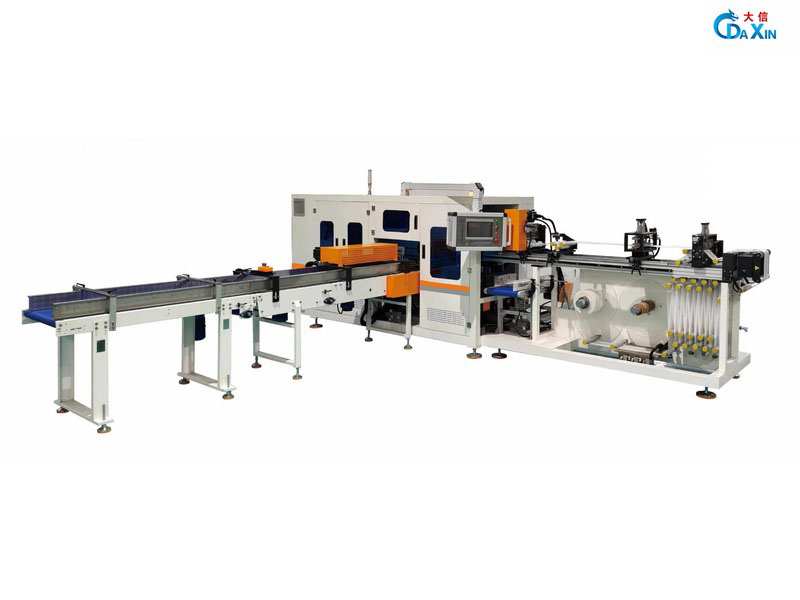
I. Pre-start Inspection (Key to Preventing Failures)
1. Check if the power supply and air source connections are normal, with the air pressure stable at 0.4-0.6 MPa. Ensure that the wires are not damaged or leaking electricity.
2. Confirm that the packaging film/packaging bag specifications are compatible with the equipment. The film roll should be installed flat without wrinkles to avoid carding the film.
3. Check if the feeding mechanism, sealing components, conveyor belt, etc. are clean and free of foreign objects. Ensure that the lubrication parts (such as bearings) are adequately lubricated.
4. Calibrate the weighing system to zero and adjust the measurement accuracy (set the error range according to the material characteristics, usually ≤ ±0.5%).
II. Operation During Operation (Safety + Efficiency)
1. Operators must wear protective gloves. Do not touch the rotating feeding mechanism, sealing knife, etc. of the transmission components with hands to avoid injury from pinching or scalding.
2. Add materials evenly and continuously. Avoid overloading the equipment with excessive material addition, which may cause blockage and overload shutdown.
3. Observe the packaging effect in real time: check if the sealing is tight (no air leakage, cracking), if the bag shape is regular, and if the printed date/labels are clear. If any problems are found, stop the machine for adjustment immediately.
4. Do not disassemble the protective cover or adjust core parameters (such as sealing temperature, feeding speed) while the machine is running. If maintenance is needed, cut off the power supply and hang a "Prohibit Operation" sign.
III. Attention to Material Compatibility (To Avoid Damaging Equipment/Influencing Packaging)
1. Adjust equipment parameters for different materials (particles, powders, blocks): add dust-proof devices for powders, control particle size for blocks (to avoid blocking the feeding port).
2. Damp materials need to be dried in advance to prevent sticking to the feeding mechanism. Also, prevent the materials from getting damp, which may cause damage to the packaging film and seal.
3. Do not package corrosive, high-temperature (>80℃) materials to avoid damaging equipment components and packaging materials.
IV. Daily Maintenance and Care (To Extend Equipment Lifespan)
1. After daily shutdown: clean the surface of the equipment and the feeding and sealing parts of residual materials, wipe the packaging film traction roller, and check if the components are loose.
2. Weekly maintenance: check the conveyor belt tension, tighten all connecting bolts, add lubricating oil to the transmission parts, and clean the debris around the weighing sensor.
3. Monthly calibration: recalibrate the weighing accuracy, check the wear of the sealing knife (if there is a notch, replace it in time), test the emergency stop button, and check if the safety interlock device is sensitive.
4. Long-term shutdown: clean the residual materials in the equipment, cut off the power and air sources, apply anti-rust oil to the prone-to-rust parts, and cover with a dust cover.
V. Emergency Handling (Quickly Solving Common Problems)
1. Overload shutdown of the equipment: cut off the power supply, clear the blockage, check the motor load condition, and restart after confirming that the components are normal.
2. Inadequate sealing: adjust the sealing temperature (usually 150-200℃, adjust according to the packaging film material), pressure or heating time. Check if the sealing knife is clean and sharp.
3. Inaccurate weighing: recalibrate the zero point, check if the feeding valve leaks, and clean the residual materials on the weighing sensor.
4. Unexpected failure: immediately press the emergency stop button, cut off the power supply, and contact professional maintenance personnel for repair. Do not allow non-professionals to disassemble the equipment.
VI. Personnel Standards (Reduce Operational Risks)
1. Operators must be trained and certified to operate the equipment. They must be familiar with the equipment operation procedures and must not operate independently without a certificate.
2. Do not stack杂物 (especially flammable items) near the equipment. Keep the operation area ventilated and clean.
3. Regularly organize equipment safety training to clarify emergency handling procedures to ensure that operators can quickly respond to emergencies.
Website: www.daxin123.com
Email: 263291959@qq.com